
Last updated on 30 / Xuño/ 2010
Lembra que, mentres les, podes escoitar a BSO da República de Homes Libres en Spotify.
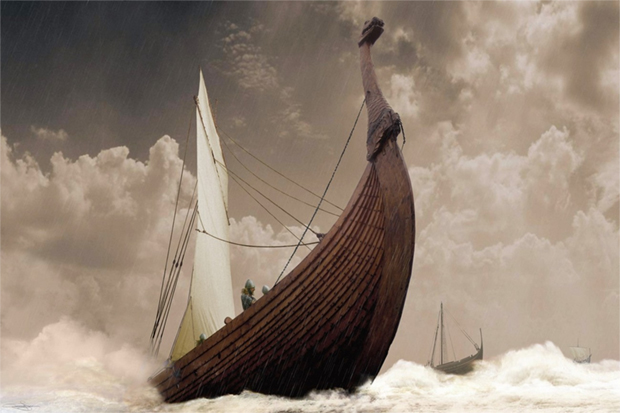
¿Como foron os ataques vikingos a Galicia? Sabemos bastante da táctica dos guerreiros normandos. Viaxaban en barcos lixeiros, facendo navegación de cabotaxe. Colocábanse nos cabos, nos estremos e nas illas e a partir de aí seguían cara o interior, penetrando na terra. Temos certa evidencia que aproveitaban, como era lóxico, as antigas vías romanas, aínda existentes, que partían dos portos da costa galega. O mosteiro de Santa Olalla de Curtis arrasárono nunha destas, seguindo a vía que levaba do Farum Brigantium -a antiga A Coruña- ata Lugo, pero non foi o único: en xeral, durante douscentos anos, todos os establecementos eclesiásticos do país vivían baixo a ameaza constante e a certeza de que eran os lugares máis rendibles para un saqueador vikingo con menos tempo. Xa entrando neste milenio, no 1015, o rei Olaf -que despois sería santo- arrasa Tui pedra sobre pedra, obrigando a construír de novo a cidade ao redor do outeiro onde hoxe se atopa. Quen sabe se o perfil fortificado da súa catedral non ten que ver co pánico herdado: o rei dubidou en volver instaurar un bispado en Tui despois de aquelo.
Os documentos, as crónicas, son tremendas. Falan dun país arrasado, e de forzas que só se conseguen rearmar ao cabo de meses e anos para repeler ao inimigo normando: fálase dos viquingos coma un cancro díficil de extirpar, pero no reconto de baixas hai algo sospeitoso. As crónicas reais e eclesiásticas, como a Historia Compostellana, dan conta sobre todo dos ataques a centros eclesiásticos, pero non nos informan de que aconteceu coas familias nobles, por exemplo, nin cos labregos ou pescadores. As crónicas dos reis de Galicia e Asturias tamén son parcas. Indican os anos dos ataques e ás veces, o nome ou nomes dos aristócratas que foron capaces de conter os ataques. E aquí vén o importante: todas son fontes parciais. Son fontes que narran o que lles interesa, que é a agresión directa ás propiedades e bens dos colectivos para os que escriben: mosteiros, catedrais, burgos eclesiásticos, fortalezas….
¿Que ocorre cando examinamos outras fontes máis indirectas? Que de súpeto se nos revelan outras perspectivas sobre o ataque, e nos dan algúns datos que nos permiten comprender mellor o difícil contexto do momento. Como acontecía cos secuestros. Eran unha práctica habitual dos normandos. Nos documentos de dereito privado, aínda moi pouco baleirados desde esta óptica, amosan detalles dunha viveza impresionante, con nomes e episodios, sobre estes episodios bélicos dos viquingos. Como a historia de Octicio, que negociou cos viquingos para liberar a unha nai e unha filla: Meitilli e Gocina. Este documento é de 1026, e fala del Vicente Almazán en Gallaecia Scandinavica:
…et sakastes nobis de barcas de Laudomanes, et dedistis pro nobis uno manto lobeno, et una spada, et uno kemiso, et tres lenzos, et una vaka, et tres modios de sal finto.
E nos sacaches das barcas dos vikingos, e deches por nós unha capa, e unha espada, e unha camisa, e tres lenzos, e unha vaca, e tres modios de sal.
Grazas a este documento sabemos o que valían a vida de dúas mulleres nesta época. Hai que imaxinalas, a Meitilli e Gocina, maniatadas e coa boca tapada, dentro dun drakkar fondeado no esteiro dun río, e a Octicio indo negociar cos normandos. Por certo que estas relacións de negociación para os secuestros sempre se realizaban con autoridades eclesiásticas ao carón. ¿Por que?
¿Podemos saber máis cousas sobre os ataques vikingos fóra das fontes eclesiásticas?¿Mesmo fóra das fontes galegas?
Podemos. Nas parcas pero intensas sagas nas que se louvaba o valor dos comandantes nórdicos. E nos revelan datos que as fontes eclesiásticas galegas sería moi difícil que nos revelaran. Observamos a Galicia da época desde a ollada dos capitáns normandos.
Por exemplo, a historia, con certos toques homéricos, que se contén na saga das Illas Órcadas, Ornkeyinga Saga, as illas ao norte de Escocia onde florecía un reino vikingo. Coñecina a través do libriño Os viquingos en Galicia de Jorge Simón Izquierdo. Rangvald, o nobre que lideraba a expedición, organizou un exército de 2000 homes en 15 barcos, e partiron en dirección Xerusalén en 1153. Tras escalas en Escocia, en Inglaterra e en Narbona (?), os normandos chegaron a Galicia dispostos a parar no inverno acó. Pero atópanse que a terra é pobre. Os labregos -non sabemos de que zona de Galicia- ofrécenlles aos viquingos un pacto.
Non se andaban con voltas. Os labregos montarían un mercado de alimentos se os normandos asasinan ao seu señor antes. Non sabemos quen era ese señor, pero sabemos que era “un estraño á terra”, que se chamaba Godofredo, e exercía o seu poder tiránico contra os labregos desde un poderoso castelo. O earl viquingo Rangvald tentou que os labregos lle ofreceran víveres para manter o exército, pero eles contestáronlles:
-Montaremos un mercado ata Semana Santa se nos librades dos homes do castelo. Podedes ficar con todo o botín da fortaleza cando a conquistedes. Godofredo é un home rico.
A fame e a perspectiva do botín entusiasmaron aos nórdicos. Debateron entre eles e acordaron queimar as murallas: para facelo, cumpría ir ao bosque e cargaren cada guerreiro con tres fatos de madeira. Pero Godofredo, o señor do castelo, era un home sabio e viaxado, con don de linguas. Pola noite, baixou do castelo camuflado como moinante e introduciuse no campamento viquingo. Alí enterouse das disensións no interior do campamento, especialmente os dous bandos: o de Eindrid, un antigo cruzado, e o do propio earl Rangvald. Tentou enfrontalos entre eles, pero non o deu conseguido.
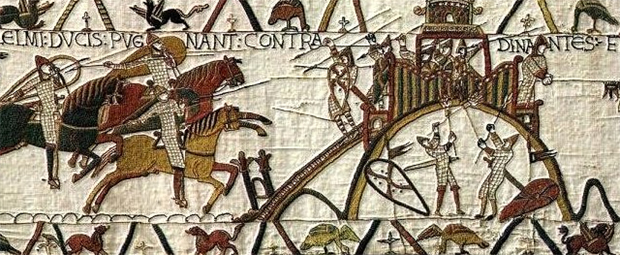
Ataque a un castelo no tapiz de Bayeux
O que segue na Orkneyinga Saga é, se cadra, un dos relatos máis detallados e vívidos da toma por asedio dun castelo galego. Os normandos puxeron madeira ao pé da muralla e atacaron o castelo polos catro puntos cardinais. Dunha banda o earl Rangvald, polo Sur, cos seus Ornkeyingers, os guerreiros das Órcadas, Eindrid e Aslak polo Oeste, John e Gudorm polo Este e Eindrid o novo polo Norte. A muralla rematou por ceder por varios puntos e o gardaespaldas de Rangvald, Sigmund angle, destacou sobre todos. Cando os viquingos conseguiron entrar no interior, Godofredo e as súas riquezas desapareceran. Os viquingos creron que o tiránico señor do castelo fuxiu no fragor e na confusión do asalto.
O relato, excepcional, amósanos que acontece cos ataques viquingos cando as fontes históricas veñen do outro lado, non do que habitualmente empregamos para saber sobre esta época, que son os curas composteláns. A historia das invasións viquingas vémolas, en Galicia, da man dos señores e dos poderosos do momento e polo tanto, aparece co seu enfoque. Pero revisando os antigos foros e documentos privados, e botando man tamén da literatura dos atacantes, descubrimos outra Historia: será parcial, como a outra, pero nos dá unha visión completamente distinta deses convulsos tempos e fai máis rico o escenario. Labregos e viquingos pareceron crear unha alianza de circunstancias fronte a un inimigo común. Durante os ataques normandos, nalgún momento, os labregos galegos puideron aliarse cos Homes do Norte para librarse da tiranía: no escenario dun novo e poderoso exército chegado dos mares tampouco soa tan estraño que quixeran botar man del para mellorar un pouco a vida. Unha mágoa é que non hai un só dato que nos permita ubicar en que sitio de Galicia ocorreron estes acontecementos. A crónica fala de Galicialand. Pero a alianza entre locais e normandos é tremendamente suxestiva.
A sorpresa é que, nas numerosas ocasións que os viquingos atacaron o Reino de Galicia, terían oportunidade de participar en máis aventuras en colaboración cos galegos. Pero iso será na vindeira entrega.
Para que vexades que non me tiro da moto, aquí vai o documento orixinal (traducido ao inglés :
Documento. Tradución da Orkneyinga Saga ao inglés por George W. Dasent en 1894:
92. They fared till they came west to Galicialand in the winter before Yule, and meant to sit there Yule over. They dealt with the landsmen and begged them to set them a market to buy food; for the land was barren and bad for food; for the land was barren and bad for food, and the landsmen thought it hard to feed that host of men. Now these tidings had happened there, that in that land sat a chief, who was a stranger, in a castle, and he had laid on the landsmen very heavy burdens. He harried them on the spot if they did not agree at once to all that he asked, and he offered them the greatest tyranny and oppression. And when the earl spoke to the landsmen about bringing him food to buy, they made him that offer, that they would set them up a market thenceforth on till Lent, but they must rid them in some way or other of the men in the castle; but earl Rognvald was to bear the brunt in return for the right of having all the goods that were gotten from them. The earl laid this bare before his men, and sought counsel from them as to which choice he should take, but most of them were eager to fall on the castlemen, and thought it bid fair for spoil. And so earl Rognvald and his host went into that agreement with the landsmen. But when it drew near to Yule, earl Rognvald called his men to a talk and said: “Now have we sat here awhile, and yet we have had nothing to do with the castlemen, but the landsmen are getting rather slack in their dealings with us; methinks they think that what we promised them will have no fulfilment; but still that is not manly not to turn our hands to what we have promised. Now, kinsman Erling will I take counsel from you in what way we shall win the castle, for I know that ye are here some of you the greatest men for good counsel; but still I will beg all those men who are here that each will throw in what [he thinks] is likeliest to be worth trying.” Erling answered the earl’s speech: “I will not be silent at your bidding, but I am not a man for counsel; and it would be better rather to call on those men for that who have seen more, and are more wont to such exploits, as is Eindrid the young. But here it will be as the saying goes, ‘You must shoot at a bird before you get him.’ And so we will try to give some counsel whatever comes of it. We shall today, if it seems to you not bad counsel or to the other shipmasters, go all of us to the wood, and bear each of us three shoulder-bundles of faggots on our backs under the castle; for it seems to me as though the lime will not be trusty if a great fire is brought to it. We shall let this go on for the three next days and see what turn things take.” They did as Erling bade. And when that toil was over, it was come right on to Yule. The bishop would not let them make their onslaught while the Yule high feast stood over them.
That chief’s name was Godfrey who dwelt in the castle; he was a wise man and somewhat stricken in years. He was a good clerk, and had fared far and wide, and knew many tongues. He was a grasping man and a very unfair man. He calls together his men when he saw their [Rognvald’s] undertakings, and said to them: “This scheme seems to me clever and harmful to us which the Northmen have taken in hand; it will befall us thus if fire is borne against us, that the stone wall round the castle will be untrusty, but the Northmen are strong and brave; we shall have to look for a sharp fight from them if they get a chance. I will now take counsel with you what shall be done in this strait which has befallen us.” But his men all bade him see to that for them. Then he began to speak, and said: “My first counsel is that ye shall bind a cord round me and let me slide down the castle wall tonight. I shall have on bad clothes and fare into the camp of the Northmen, and know what I can find out.” This counsel was taken as he had laid it down. And when Godfrey came to earl Rognvald, and said he was an old beggar carle, and spoke in Spanish; they understood that tongue best. He fared about among all the booths and begged for food. He found out that there was great envy and splitting into parties amongst the Northmen. Eindrid was the head of one side, but the earl of the other. Godfrey came to Eindrid and got to talk with him, and brought that before him that the chief who held the castle had sent him thither. “He will have fellowship with thee, and he hopes that thou wilt give him peace if the caste be won; he would rather that thou shouldst have his treasures, if thou wilt do so much in return for them, than those who would rather see him a dead man.” Of such things they talked and much besides. But the earl was kept in the dark; all this went on by stealth at first. And when Godfrey had stayed a while with the earl’s men, then he turned back to his men. But this was why they did not flit what they owned out of the castle, because they did not know whether the storm would take place at all; besides they could not trust the landfolk.
93. It was the tenth day of Yule that earl Rognvald rose up. The weather was good. Then he bade his men put on their arms, and let the host be called up to the castle with the trumpet. Then they drew the wood towards it, and piled a bale (5) round about the wall; the earl drew up his men for the onslaught where each of them should go. The earl goes against it from the south with the Orkneyingers; Erling and Aslak from the west; John and Gudorm from the east; Eindrid the young from the north, with his followers. And when they were boun for the storm they cast fire into the bale. Then the earl sang:
“Ermingerd’s white handmaid bore
Wine to men, the goddess bright
Of driven snow, so fair she seemed
To my vision when we met;
Now the warrior band resolves
To rush onward and attack
Castle-garrison with fire;
Sharp-swords spring from out the sheaths.”
Now they begin to press on fast both with fire and weapons. Then they shot hard into the work, for they could not reach them by any other attack. The castlemen stood loosely here and there on the wall, for they had to guard themselves against the shots. They poured out too burning pitch and brimstone, and the earl’s men took little harm by that. Now it turned out, as Erling had guessed, that the castle wall crumbled before the fire when the lime would not stand it, and there were great breaches in it. Sigmund angle was the name of a man in the earl’s body-guard; he was Sweyn Asleif’s son’s stepson; he pressed on faster than any man to the castle, and ever went on before the earl; he was then scarcely grown up. And when the storm had lasted awhile, then all men fled from the castle wall. The wind was on from the south, and the reek of the smoke lay towards Eindrid and his men. And when the fire began to spread very fast, then the earl made them bring water, and cool the rubble that was burned. And then there was a lull in the assault. (6) Then earl Rognvald sang a song:
“Aye shall I that Yule remember,
Warrior! which we spent at Agdir,
East among the fells with Solmund,
Steward strong of Norway’s king;
Now again at that same season
Of another year as then
Stunning din of swords I make
On the castle’s southern verge.”
And again he sang:
“Well pleased was I when the wine-tree (7)
Listened to my winning words;
Past all hope then was I given
At harvest to the foreign maid;
Now again I sate the eagles,
Since full well we love the girl
Nobly born; and now the freestone
Set in mortar must give way.”
Then Sigmund angle sang this:
“Bear these words back when the spring comes
To the goddess needle-plying,
Wearing gems from fell-side won,
Bear them o’er the sea to Orkney;
That no warrior, though he were
Wight of elder years, went farther
Forward ‘neath the castle walls,
When strokes sung high at early morn.”
After that the earl made ready to storm, and Sigmund angle with him. There was then but a little struggle, and they got into the castle. There many men were slain, but those who would take life gave themselves up to the earl’s power. There they took much goods, but they did not find the chief, and scarcely any precious things. Then there was forthwith much talk how Godfrey could have got away; and then at once they had the greatest doubt of Eindrid the young, that he must have passed him away somehow, and that he [Godfrey] must have gone away under the smoke to the wood.
After that earl Rognvald and his host stayed there a short time in Galicialand, and held on west off Spain.
Neste blog de Cossue hai unha reseña sobor dunha desas colabouras entre galegos e leordomani perto de Lugo contra unha “xente de fora” que eran… BASCOS!!
http://frornarea.blogspot.com/2009/07/bascos-e-vascos.html
Un saúdo
A verdade é que unha boa parte dos destinos de Galicia ao longo da Historia viron determinados por campesiños que, ante a oportunidade de escoller entre malo coñecido e malo por coñecer, non dubidaron en facerse vasalos do demo para librarse dos seus amos. Cómo serían éstes!
Moi interesante, de verdade. Non coñecía eu estas cousas.
Antón, efectivamente, dese tema falaremos na seguinte entrega. Padín, a cuestión é canto nos ficará por saber. Faláronme de que hai unhas cantas referencias interesantes en tumbos, que aínda están por dixitalizar ou publicar, ou por baleirar desde ese punto de vista. A voz dos campesiños en todo isto pode ser moi importante para comprender todos estes acontecementos.
Quizáis os lordimani teñen máis que dicir na historia de Galicia do que tradicionalmente se considerou. Parece que houbo asentamentos permanentes (especialmente na Costa da Morte) e incursións no interior.
Nunha entrevista a Enrique Dans, este dixo que o seu apelido quere dicir “danés” e vén dun deses grupos de “asimilados” na zona de Vimianzo (lenda ou realidade histórica?).
Ás veces escribo, sobre todo relatos históricos. Necesito que publiques pronto novas entregas… Faime falta documentación na que basearme. Grazas por estar aí, o teu traballo é fantástico…
Mercedes, non me metas presión! :) De todos os xeitos, tes un montón de documentación nas bibliotecas e na propia rede. Con algo de latíns e acudindo á bibliografía básica podes localizar moitas cousas abraiantes. É o mundo dos semi-inéditos galegos, unha copiosa bibliografía nunca reeditada e publicada entre finais do XIX e os anos 40 ou 50, esquencida por todo o mundo. Xa me contarás.
Sobre o tema dos asentamentos voume reservar ata que chegue o momento: como vedes, o título desta liña de posts dentro da Republica dos Homes Libres chámase “Na procura dos Lordomani”. ¿Atoparémolos ou non? Sigan sintonizando esta canle. ;)
Supoño que xa saberás desto, pero por se non é así…
http://www.blogoteca.com/arqueoloxia/index.php?cod=87072
mágoa de non entender nin papa de inglés…
Manuel, parabens por toda esta investigaçom. Sabes algo de um menhir ou pedra chantada em Picaranha, Padrom? Hai anos que o achamos acarom de umha canteira e tem umha pinta “rara”, creo lembrar que na sua face principal tem algumha incriçom e mesmo umha cabeça com capacete com proteçom nasal muito semelhante a alguns dos usavam os homens do norte. Umha aperta.
Lim em algum post de celtiberia.net que existe um menhir dete tipo com inscriçons do S. XII e pola face de atrás leva umha cruz como práctica habitual para cristianizar as “pedras bárbaras”.
breoghain, creo que te refires a este:
http://www.manuelgago.org/blog/index.php/2010/06/07/padron-chafalladas-e-manifestacions/
No post tamén tes ligazóns para saber máis da historia. Hai outros tres coma el.
Efectivamente. É este no que se ve umha cabeça com capacete ou algo semelhante?
Non, en ningún deles aos que nos referimos hai ningunha cabeza con capacete. Podes velos todos nun pdf vinculado desde os comentarios do post dese marco. Supoño que algunha forma rochosa lle suxeriría a alguén iso.